Your cart is empty
Tax included and shipping calculated at checkout

Menu cassetto
Tax included and shipping calculated at checkout

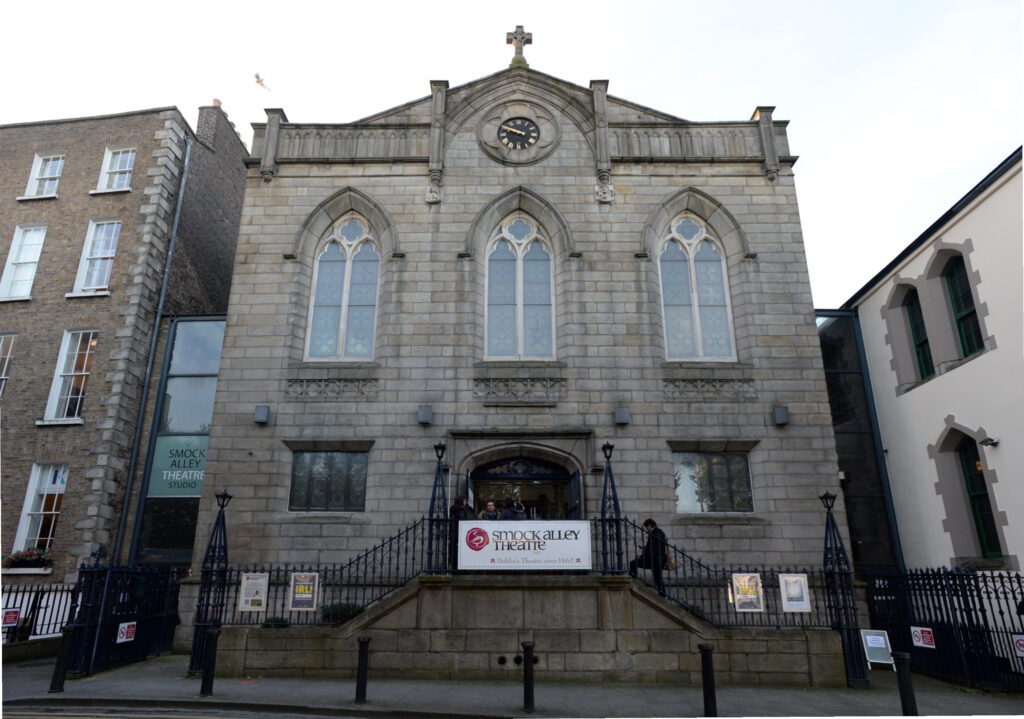
Situated in the heart of Dublin, beside the vibrant nightlife of Temple Bar, Smock Alley Theatre has played host to countless productions since first opening its doors. This October, the historic venue will turn its attention to horology, hosting Chronography – a single-day celebration of independent watchmaking bringing some of the world’s most exciting independent and microbrands to Dublin.
Karl Brown, founder and designer of independent Dublin design studio Chrome Calibre, tells WatchPro why he believes the event fills a long-standing gap in Ireland’s watch scene, how the country’s collector community is evolving and what visitors can expect from Chronography.
How did your fascination with watches begin, and what sparked that first long-lasting passion?
Whenever you saw the watch, it looked as though it wasn’t working because the screen was blank. As soon as you pushed the button, the red LED display of the time would light up for a couple of seconds. The idea was that the battery life wouldn’t last long enough if they left it on all the time, so you had to access it with a button.
When I was pretty young, that seemed like witchcraft or magic, or whatever you want to call it. There was a fascination from there.
Later on, my dad had a Rolex and my mum had some nice watches. Then, when I got my first job, I went out and got myself what I thought was a pretty cool and decent watch. It was a titanium Pulsar solar watch, which is still ticking to this day. I haven’t changed anything in it and it’s very robust.
That was the very earliest stage of it. I think I might have had a couple of Swatch watches when I was younger as well.

You’ve built Chrome Calibre around the idea of doing things differently. Where did that creative and slightly rebellious approach to watch collecting come from?
It’s a culmination of a lot of things.
Initially, when I went to college, I studied industrial design, but I never pursued a career in industrial design. It’s always been something I’ve done in the background. I’ve always sketched, worked on things, done layouts for offices and all that kind of stuff.
I’ve always wanted to do something in the watch industry, although I never had the idea of actually making a watch. That’s probably still somewhere in the background.
Around the time of COVID, I was thinking, “Okay, I’ve got all this time to think and do things.” I wanted to change career. There were a couple of personal things that facilitated that as well. I lost my wife to Breast Cancer in 2019, I wanted to spend less time on the road and be there for my son.
I started speaking to career guidance people, and they gave me tips, hints and questions to focus on where I wanted to move into. In the process, I completely binned all the ideas we were discussing and said, “I’ve got this idea for a watch winder.”
They were like, “What’s a watch winder?” I said, “I think if I can make it work, it’ll be pretty cool.”
So I started using the skills I had from industrial design – CAD skills as well as practical stuff like modelling cardboard, basic electronics and all that kind of stuff – and started developing these ideas.
I thought, “If I were to give a new job a go, there’s going to be at least six months of figuring out whether it works before you get a contract or whatever.” So I gave myself six months and said I’d see what happened.
Within those six months, I’d pretty much created and made a prototype for the first product. It sparked so much creativity, joy and interest that I thought, “Yeah, why the hell would I ever go back to a normal job?”
That’s where it all blossomed out of several different things.
When you look at the watch industry, everybody tends to stick to things that are quite established, tried and tested.
I thought, “Okay, there are all these things that are useful, but there’s a weird vibe around watch winders. They tend to just be a box, and people find them useful, so they use them or hate them and don’t use them. I thought the best way to make people want to use them was to make them look interesting.”
So I started creating ideas around the basic cube shaped watch winders and developing interesting shapes and themes and that kind of thing.
The downside was that I didn’t realise how expensive it would be to actually manufacture the product. I couldn’t get enough backing for the concept to continue, which was frustrating, because I had people from people who paid deposits across the US, Europe and Asia as well as having people from MB&F contacting me asking when they could get one to test out.
There’s a bit of a gap between getting a product designed and actually getting it out there, so I was trying to figure that out.
So the next thing I decided to do was watch stands. You see these things and they tend to be very boring and staid: “Here’s a lump of marble, it has a little stick and a leather patch on top, and there’s your watch stand.”
I thought, “There has to be something more than just that.”
So, I created Puzzle; a multi-layered metal system with my signature puzzle-piece attachments that can link each watch stand and vanity tray together, in any order or configuration. You can grow it with your watch collection, re-arrange them, have some in your office or some on your bedside table, and move them around. Be creative an have fun with them
It was about trying to create something a bit more interesting – something that would look good on your desk and that you’d enjoy having there.
It was about bringing a bit of playfulness and interest to something different, rather than jumping into the same box as everybody else. I’d rather just be over here by myself making mad things.
Have you learned anything new about collectors through building Chronography and becoming so involved in the watch community in Dublin?
My involvement in the watch community has been somewhat strange.
I was supposed to be going on a trip to Berlin with my family, but then I found out there was the Festival of Time show down in Waterford. I thought, “Oh, that’s on at the same time. I’m obviously not going to go to this.”
Unfortunately, my parents ended up with COVID and the whole trip was cancelled, so I thought, “Oh, now I can actually go down.”
I went down and ran into a former design lecturer from when I was doing industrial design. He had designed a watch and was there saying, “If you’re interested in watches, join this club.”
So I joined the club and met friends there, and then met people around Dublin who were interested in watches. I was seeing all these different collecting styles. People were interested in particular brands, particular eras, particular looks and styles. Everybody was coming at it from a different angle.
There are people who will say, “I’m a movement guy,” or “I’m a dial guy,” or “I’m a vintage guy.” There are all these different identities and stories around why people collect watches and what they’re interested in.
That was my introduction to it. From there, I met some good friends and we’ve travelled to Geneva, seen RedBar events in Edinburgh and things like that. It’s just grown and grown.
Then I spoke to the guys at RedBar, got the licence to do the chapter here, and we sort of morphed the Dublin group into RedBar Dublin.
It’s me stumbling into random things as I go, putting my hand up and saying, “Yeah, I’ll do that.”
That’s also how I got into Chronography. We were always having conversations about how one of the guys was going to New York for Windup, or someone was going to London for Great British Watchmaker’s Day, and we’d say, “Why don’t we have one here?”
So I put my hand up again and said, “Okay, let’s see what it takes and how we can get it going.”There are people who will say, “I’m a movement guy,” or “I’m a dial guy,” or “I’m a vintage guy.” There are all these different identities and stories around why people collect watches and what they’re interested in.
That was my introduction to it. From there, I met some good friends and we’ve travelled to Geneva, seen RedBar events in Edinburgh and things like that. It’s just grown and grown.
Then I spoke to the guys at RedBar, got the licence to do the chapter here, and we sort of morphed the Dublin group into RedBar Dublin.
It’s me stumbling into random things as I go, putting my hand up and saying, “Yeah, I’ll do that.”
That’s also how I got into Chronography. We were always having conversations about how one of the guys was going to New York for Windup, or someone was going to London for Great British Watchmaker’s Day, and we’d say, “Why don’t we have one here?”
So I put my hand up again and said, “Okay, let’s see what it takes and how we can get it going.”
Are you seeing more of an appetite for independent watchmakers, or are collectors still primarily interested in the big players?
There’s always going to be the conversation around Watches and Wonders – what’s Rolex going to do, what’s Tudor going to do, what’s Patek going to do? That’s always going to be in the background and it gets people talking.
But I’ve found the growth of independent brands and more niche stuff really interesting. It’s not just someone going into a typical AD and saying, “I’m going to buy a Tudor, Omega, Cartier,” or whatever it may be.
People are going out and finding Fortis, Doxa, Farer, Christopher Ward, Echo/Neutra and all these different brands and saying, “These guys do something different.”
It’s more accessible price-wise, and you’re not waiting on a waiting list. They’ve got more colours, interesting dials and better features. They’re doing things that a lot of the big brands can’t or won’t do.
There are features on some of these independent brands where you’re thinking, “How come the big guys don’t do this?” Little micro-adjustment clasps on a watch strap, for example. You think that should be on everything, but it isn’t.
They also play around with different styles, shapes, materials and colours. They’re braver in many respects compared to the big guys.
The big brands just want to reiterate the same thing because they know it works, there’s a massive market for it, and so on. The independents come out and say, “No, we’re going to do it this way,” and throw in crazy colours and try different things.
I think it’s fantastic. The more of it, the better.
Let’s talk about Chronography. Where did the idea for the exhibition come from, and what did you feel was missing from the watch events already out there?
The idea came around because of the typical conversations between the guys in the watch group. They’d say, “We’re going over to London because that’s where the nearest show is,” or one of the guys might be travelling for work and say, “I’m going to be in the New York area anyway, so I can go to the Hodinkee event or the Windup Watch Fair.”
One of the guys was in Toronto, so he went to a show over there. You see these shows popping up everywhere.
We were over at Watches and Wonders, and there was Chronopolis happening alongside the main show, with a ton of independents. It was always interesting, but anytime anybody in Ireland wanted to see these brands, they had to travel.
Either you order online and it arrives and you’re thinking, “Do I like it or not?” or you have to travel to see it.
There aren’t really shops or places in Ireland showcasing these independent brands. It’s a very small watch retail market. There are only a couple of proper authorised dealers, and they do the big brands. There aren’t the quirky little independents showcasing crazy things.
It was a case of, “Okay, we’re travelling to these places and seeing these brands, but why can’t we bring them over here?”
From conversations with people in RedBar and elsewhere, they were turning up with these watches, so they’d obviously seen them, liked them and were interested in them.
I thought, why don’t more people know about them? Why can’t we just bring them over here and do a show?
It gives people the opportunity to see what the community is like and get up close and personal with these watches. It’s also a way of educating people who don’t know about these brands.
So, yeah, it was another case of putting my hand up and saying, “I’ll go and try to do this.”
Can you tell us a little bit more about what we can expect from Chronography this year?
I wanted to create something that was a little bit different from what I’d seen before. I wanted to give the local community and local watchmakers more of a platform to showcase what they do.
Instead of just having a room full of brands, I wanted an additional section. There are really two aspects to the Chronography show.
There’s the exhibition area, where we’ll have all the brands showcasing their watches, and then, to the side of that, there’s a theatre space where we’ll have watch talks and brand presentations throughout the day.
For instance, when I was speaking to John McGonigle, he was going to talk about bringing Irish watchmaking back to Ireland. Years ago, we used to have watchmaking schools here, but they closed down, and now he’s trying to get them reopened.
I wanted to give him an opportunity to present in front of people and say, “This is what’s coming down the line. This is where we need to be. This is what we’re planning.”
It was also about giving local watchmakers a platform to say, “This is what we do in Ireland,” and showcase it as an Irish watchmaking story.
It’s almost like a little Irish version of the British Watchmakers’ Day.
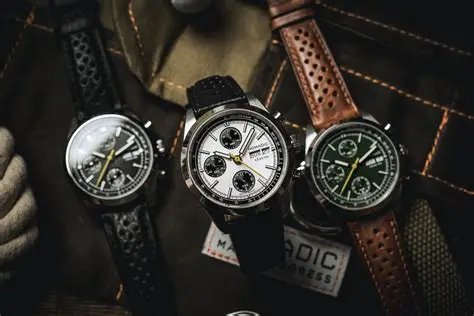
Then you’ve got people like Nomadic in Belfast, who are doing some great work, promoting a lot and getting their name out there. They’re also very supportive of the Irish watch scene.
You also find all these different people in the industry who are working behind the scenes. For example, there’s a very accomplished watchmaker based in Belfast called Stephen McDonald. Unfortunately, I couldn’t get him into the show because he was working on the next creation for MB&F.
There is also John Mc Gonigle who creates his own watches called Oilean (Irish for Island). He was also the main person with Audemar Piguet dealing with all their tourbillions for several years, and he’s based in the centre of Ireland. We also have people like Alison Moriarty who specialises in enamelling and is based in Clare.
There’s this level of watchmaking in Ireland that I don’t think gets spoken about enough. So I wanted to create a platform for talks, education and presentations. If you’re going to be there, we’ve also got Scottish Watches doing their podcast from the venue.
I also managed to find the right space. Smock Alley Theatre has an exhibition space and a theatre space, and when you see the actual building, its history and the look of the place, it has so much character and interest.
Sounds like you’ve had a positive reaction to the event. Have you been surprised about the response you’ve received?
Yes, it’s been extremely positive.
The brands that have joined us have been extremely positive and really excited about it. They’re saying, “It’ll be great to see what’s going on in Ireland. We’ve heard lots about it. It’ll also be a great chance for us to check out the area.”
From the attendee side, I was very surprised at how quickly we were able to nearly sell out. We’ve allocated 1,000 tickets and we’ve already done nearly 800 in 3 weeks since we launched them. And this is with no promotion. It’s all been pretty much word of mouth.
I’ve had a phenomenal amount of uptake and interest. It just shows there’s a huge appetite for it.
That’s a very good sign for the future of the event. Once the doors close on Chronography, what would make you look back and say, “That was a success”? And where would you like to take it next?
It’ll be a success as long as the brands are happy with what happens during the day and the audience is happy with what they saw.
There’s no point in putting on a show and then nobody feeling as though their exhibition fee was worth it. Equally, nobody should leave feeling they didn’t see the products they wanted to see.
For next time, I was talking to one of our sponsors, Paul Sheeran Watches and they were already saying, “This is a great idea, but have you heard of Watch Week?” So, they’re already looking ahead to see if there’s a way of expanding it into something larger.
Next year will probably be a full weekend, if not longer. Brands are already talking about doing their own satellite events around the show. It could expand the whole idea across a broader spectrum.
Initially, I was just talking to them about sponsorship, and I was like, “hold on, guys. It’s just me trying to do this first event. Calm down for a second.”
But that’s where the excitement comes in. When people get the idea and get behind it, and you’re open enough to say, “Okay, let’s talk about this and see where we can go” that’s exciting.
I’d also like to say a big thank you to the different people who are supporting me along the way, like WatchPro, Scottish Watches, Fortis, all the different brands who are joining us at the event like Christopher Ward, Nomadic, Doxa, Vertex, all of the brands, and not to mention the local Irish people like Moriarty Watches, Martin Design, Oilean and so on. It’s going to be a great day.
For more information, visit https://chronography.ie/
